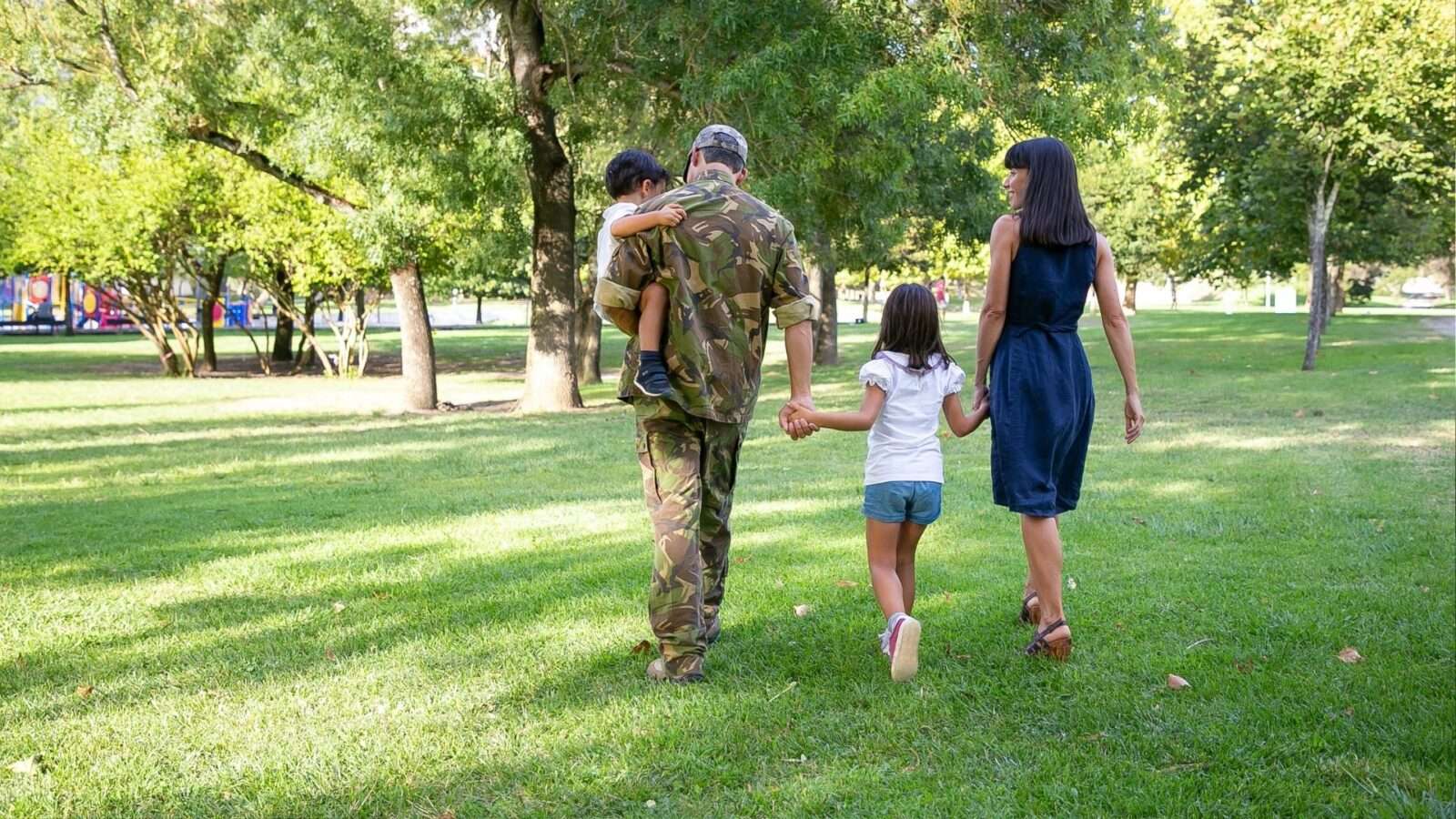
Divorce can be an emotional and logistical challenge for any family, but for those who serve in the armed forces, or are married to someone who does, housing concerns often add another layer of legal complications.
In the Tampa area, where military installations like MacDill Air Force Base play a major role in our community, military families here need to understand how Florida law and federal military housing rules intersect and may affect their next steps when they are pursuing a separation or divorce.
Understanding Military Housing Benefits
Service members receive housing support in one of two main ways, and both types have different implications when a marriage ends.
On-Base Housing
Military installations often provide government or privately managed homes for service members and their families. These residences are typically close to the base and include amenities that support military life. Living on base fosters a strong sense of community and reduces commuting costs, but eligibility is tied to a service member’s active status.
Basic Allowance for Housing (BAH)
For those who live off-base, the military provides a monthly housing allowance known as Basic Allowance for Housing, or BAH. This helps cover rent or mortgage expenses and is calculated based on three factors:
- The service member’s rank
- The location of duty station
- Whether the member has dependents
BAH is considered part of the service member’s overall income. While it helps families maintain stability during the service member’s active duty, it can also become a point of negotiation in divorce proceedings, as it may affect child and spousal support calculations.
Schedule your free meeting with our team today to see if our Lawyers can help you.
Who Can Remain in On-Base Housing After Divorce?
One common concern in a military divorce is who can remain in on-base housing once a divorce becomes final.
- Service member’s entitlement: On-base housing is a benefit earned by an active-duty member but not the spouse. Once a divorce is finalized, the non-military spouse can no longer stay indefinitely. If the parenting plan gives the service member majority time-sharing, the service member keeps eligibility for on-base housing with the “with dependents” rate, and the child can remain. In this case, the service member must provide the final parenting plan or court order to the Defense Enrollment Eligibility Reporting System (DEERS) office.
- Grace periods: Most bases provide a short transition period (often about 30 days) for spouses and children to move out after the divorce becomes final.
- Possible extensions: In some situations, such as when children are enrolled in base schools or when the family is protected by domestic violence statutes, the housing office may grant extra time.
Every base has its own procedures, so contacting the local housing office will be critical. The earlier you get details about deadlines and required paperwork, the smoother your transition will be.
The Impact on Basic Allowance for Housing (BAH)
During and after a divorce, Basic Allowance for Housing (BAH) can change significantly, and these changes can affect both spouses’ financial profiles and stability.
- During separation: The service member may continue to receive BAH at the “with dependents” rate as long as they are providing adequate financial support for their family.
- After divorce: Once the divorce is final and dependent status changes, the service member typically loses the “with dependents” rate. BAH may decrease to the “without dependents” rate.
- Effect on support calculations: Florida courts generally consider BAH part of the service member’s income when determining child support or alimony. This means the allowance change can directly influence how much support a service member is required to pay or entitled to receive.
Because BAH is both a military benefit and a factor in Florida family law calculations, it is crucial to work with an attorney experienced in military family law matters who understands how these two areas intersect.
Click to contact our family lawyers today
Protecting Children’s Stability
In a Florida military divorce, the children’s stability is a significant factor when housing decisions are made, both by the family court and by the military housing office. Here is how the two can overlap and influence each other:
1. Florida Courts Prioritize the Child’s “Best Interests”
Under Florida law, parental responsibility and time-sharing must serve the child’s best interests, which specifically includes keeping the child’s living situation stable.
- The court will look at where the child will live, how close the home is to school and healthcare, and how easily the child can maintain relationships with both parents.
- If a move, such as leaving on-base housing, is unavoidable, the court may adjust a parenting plan or time-sharing schedule to minimize the disruption to the child.
2. Influence on Base Housing Decisions
While the military controls who can remain in on-base housing, the housing office is often willing to work with families when a court order shows the importance of continuity for the children.
- Short-term extensions: If the non-military spouse has temporary primary time-sharing or needs extra time to find off-base housing, base housing officials may grant a brief extension beyond the usual 30-day move-out period.
- Documentation: Showing a Florida court order or parenting plan that highlights the child’s schooling and care needs can strengthen the request for additional time.
3. Impact on Basic Allowance for Housing (BAH)
Because BAH is based on whether the service member is supporting dependents, the parenting plan matters.
- A service member with majority time-sharing or responsibility for housing the children may keep the “with dependents” BAH rate, helping preserve the children’s current living standard.
- Courts often consider the BAH benefit when setting child support, ensuring the children’s housing needs are met even if the family leaves on-base housing.
4. Coordinated Planning
Protecting children’s stability requires collaboration between the parents, their attorneys, and the base housing office.
- Spouses and their legal counsel can present evidence to the court reflecting school continuity and the child’s need to remain near familiar support networks.
- The military housing officer can also offer guidance on temporary housing or relocation support while the parenting plan is finalized.
The bottom line is that Florida judges and military housing officials share a common goal: keeping children secure while minimizing family upheaval. By aligning a parenting plan with military housing timelines and documenting what is in the child’s best interests, divorcing military parents can help ensure that their children experience as little disruption as possible during the transition.
Schedule a call with one of our client services coordinators today
Steps for Spouses to Take
For the Non-Military Spouse
If you are the non-military spouse, you will lose your eligibility to remain in on-base housing once your divorce is official. To avoid last-minute scrambles:
- Collect critical housing documents. Gather your base housing agreement or lease, any letters from the housing office, and copies of the service member’s Basic Allowance for Housing (BAH) statements. These will be important when you negotiate support or relocation costs.
- Plan for relocation well in advance. Base housing offices generally give a grace period of about 30 days after the divorce is final. Begin researching other housing options as soon as divorce becomes likely and secure off-base housing before the 30-day deadline.
For the Military Spouse
The service member also faces important decisions that affect their own finances and their children’s stability.
- Confirm your BAH status. During separation, you may continue receiving BAH at the “with dependents” rate if you are providing adequate financial support. After a divorce, that rate usually drops unless you have majority time-sharing. Check with your finance office to understand when and how these changes take effect.
- Communicate with the housing office early. Let the base housing office know about your pending divorce and ask about procedures for transitioning your spouse and children. Early communication can help you request an extension if your children need to finish a school term or if the court’s parenting plan supports a more extended stay.
- Understand your parenting plan. Florida courts will create a parenting plan that addresses time-sharing and parental responsibility. Ensure that your plan reflects any deployment or permanent change of station (PCS) orders so that the children’s living arrangements remain stable.
- Seek a Tampa family law attorney familiar with military regulations. Work with an attorney who understands how to balance your federal obligations with Florida’s family law requirements.
Why Acting Early Matters
The earlier both spouses start planning, the easier it will be to protect the children’s sense of stability. Gathering and preparing documentation, coordinating with the base housing office, and working with a skilled Florida military divorce attorney can prevent last-minute crises and help the entire family transition more easily.
How the Experienced Family Law Attorneys at Melone Hatley, P.C. Can Help
At Melone Hatley, P.C., we understand that military families in the Tampa Bay area face challenges that go far beyond the average divorce. Questions about on-base housing, Basic Allowance for Housing (BAH) changes, and how these changes affect support can feel overwhelming, especially if you are trying to maintain stability for your children.
Our team combines Florida family law experience with extensive knowledge of the unique federal rules that govern military life. We work side-by-side with service members and their spouses to:
- Protect the child’s stability and craft parenting plans that work around deployments and PCS orders
- Ensure BAH and other military benefits are properly addressed in support and property division
- Guide families through on-base housing transitions and timelines and help coordinate with base housing offices when extensions or special arrangements are needed
Whether you are the non-military spouse or the service member, you should not navigate these matters alone. Call our Tampa office at 813-400-1602 or visit our website to schedule a free consultation with a Client Services Coordinator. Let our experienced military attorneys help you protect your family so you can plan your next chapter with peace of mind.

Schedule a call with one of our client services coordinators today.